Small spaces · Outdoor cooking
Good food. Room to gather.
Choose a portable two-burner barbecue around your patio, storage space and menu. Practical UK guidance on gas connections, safe setup and cooking in batches.
Choose with confidence
Start with what matters.
Confirm the gas and regulator requirements
Plan a safe outdoor cooking area
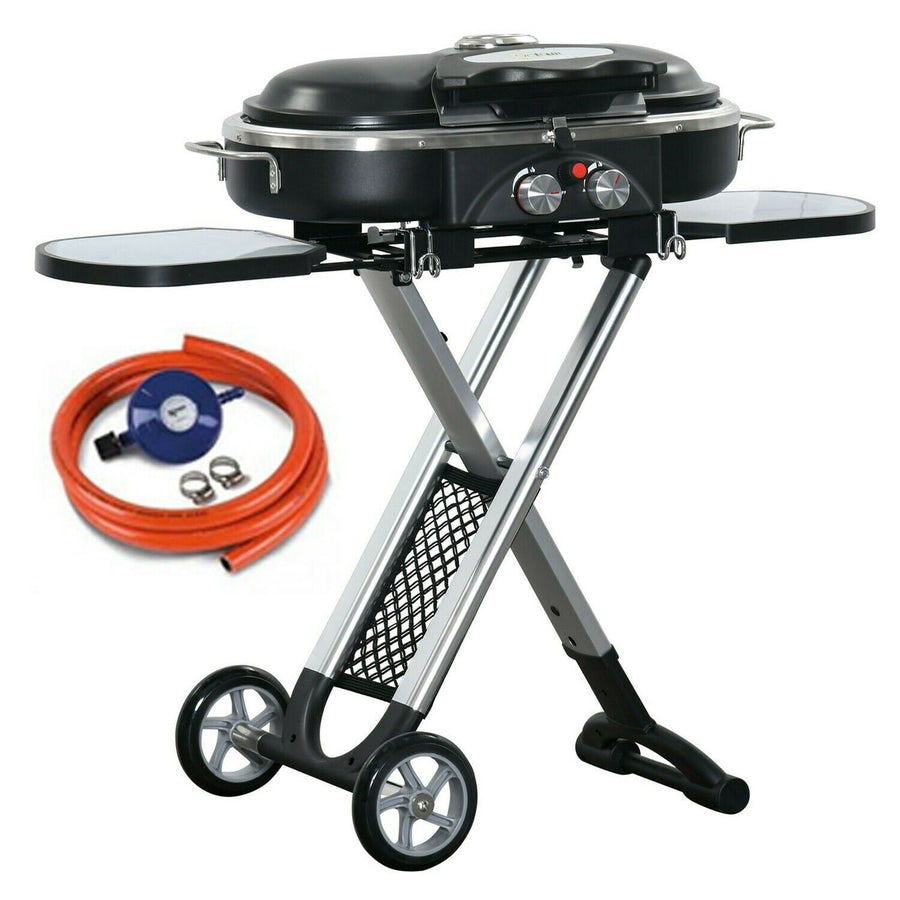
Tower T978522 Tourer Two-Burner Gas BBQ
Confirm the exact T978522 model, supplied accessories, open and folded dimensions, gas category and required regulator before ordering. Use the current displayed price; historical comparison prices and warranty claims are not current offers. For outdoor use only.
Check the current productBBQTour guides
A useful place to begin.
2 Burner Gas BBQ UK: Capacity, Zones and Safety
Assess a two-burner gas BBQ for your space and menu. Compare usable grill area, plan cooking zones and check the specified gas supply, regulator and safe outdoor setup.
Read the guide →Folding Gas BBQ UK Buyer's Guide: X-Frames and Car Boots
Choose a folding gas BBQ around the space you actually have. Check folded dimensions, weight, frame stability and transport requirements before relying on a portable label.
Read the guide →Tower Tourer and Weber Portable BBQs: A UK Comparison Checklist
Compare the exact Tower Tourer and Weber portable BBQ models. Check fuel, cooking area, folded dimensions, weight and included accessories using current model-specific information.
Read the guide →Compare the type of barbecue
- Two or three BBQ burners? Choose by the meal — Compare two and three burners by food space, finishing zones and how many plates must be ready together.
- Tabletop or freestanding gas BBQ? — Compare the complete support setup, working height and storage route before choosing a tabletop or freestanding gas BBQ.
- Gas or charcoal BBQ for weeknight cooking? — Compare lighting, heat control, shutdown and cleanup for short outdoor meals before choosing gas or charcoal.
- Gas BBQ or pizza oven: buy for your main menu — Choose between open-grate meals and pizza-focused cooking by menu, cookware, setup and storage requirements.
- Two-burner gas BBQ or dedicated smoker? — Compare short grilling sessions with long smoking cooks, including control, capacity and approved fuel use.
- Is a BBQ side burner worth the extra space? — Decide whether an extra pan burner solves a real meal task, or whether prep space matters more.
- Enamelled steel or cast-iron BBQ grates? — Compare the exact grate construction, lifting, care instructions and replacement availability before choosing.
Check fuel, fit and ownership before paying
- Propane or butane for a gas BBQ? Read the label first — Identify the fuel approved for your exact BBQ before comparing propane, butane or a patio-gas bottle.
- BBQ regulator and cylinder compatibility checklist — Record fuel, pressure, connector and hose requirements together instead of buying a regulator by appearance.
- How to measure a gas BBQ for a cover — Measure the cold BBQ in its actual covered configuration and check vents, closures and cylinder storage separately.
- Transporting a gas BBQ and cylinder by car — Plan the cold appliance and cylinder as separate loads, with upright cylinder carriage and supplier-specific safety checks.
- Buying a BBQ for a rented or shared garden — Check permissions, cylinder storage and other residents’ access before choosing a gas BBQ for a shared outdoor space.
- New gas BBQ: cold assembly and first-use handover — Check the exact manual, parts and cold assembly before accepting a new gas BBQ for first use.
- Used or new gas BBQ? Check the hidden ownership gaps — Compare a used BBQ’s model, condition, parts and support evidence with a documented new offer before paying.
Choose accessories and resolve problems
- Replacement BBQ grate: check fit before ordering — Identify the model, supports, section shape and approved part number before buying a replacement BBQ grate.
- BBQ lid thermometer or food probe? — A lid gauge describes its location; a food probe checks the food. Choose equipment for the measurement you need.
- Gas BBQ in a windy garden: buying checks — Check operating limits, flame stability and a safe outdoor location before buying for an exposed garden.
- Gas BBQ will not light: safe first checks — Identify a missing instruction, fuel question or fault without bypassing ignition safeguards or repairing gas parts.
- Rust or chipped BBQ enamel: clean or replace? — Distinguish deposits, damaged cooking parts and structural concerns before scraping, repainting or ordering replacements.
- BBQ flare-ups or grease fire: when to stop — Recognise when routine cooking has become unsafe, and inspect the cold grease system before using the BBQ again.
- Gas BBQ starter tools: buy by the missing task — Build a short BBQ tool list around turning, clean serving, temperature checks and approved cleaning rather than buying a large set.
Plan the complete fuel and cooking setup
- Budget for a gas BBQ: the complete setup cost — Build a first-use budget that includes confirmed gas supply, storage and genuinely missing tools, not only the BBQ price.
- Small or large BBQ gas cylinder: choose the logistics — Compare compatible cylinders by storage, handling and refill access rather than assuming the biggest bottle is best.
- Gas cartridge or refillable-cylinder BBQ? — Compare the complete approved fuel system, resupply and storage before choosing cartridges or a refillable cylinder.
- Can your BBQ use a caravan external gas point? — Identify the caravan outlet and BBQ requirements before buying a connection hose or planning to omit a cylinder.
- Pellet or two-burner gas BBQ: compare the whole system — Compare fuel storage, electrical requirements, cooking routine and cleanup before choosing pellet or gas equipment.
- Camping stove or gas BBQ for your trip menu? — Compare pan cooking and direct grilling, including support, fuel and the full packed load, before buying.
- BBQ BTU and kW: compare output with cooking area — Read heat-output labels as specifications, not promises of food capacity, efficiency or temperature uniformity.
Compare specialist systems and food-handling tools
- Hybrid gas-and-charcoal BBQ or two separate cookers? — Check the permitted changeover, usable cooking space and storage before choosing a hybrid BBQ instead of separate appliances.
- Infrared or conventional gas BBQ: what to compare — Look beyond the infrared label and compare the exact heat system, cooking modes and approved cleaning requirements.
- Rotisserie or lidded roasting: check compatibility first — Check mounts, clearance, loads and power before choosing a rotisserie rather than a manual-approved roasting arrangement.
- One or several BBQ thermometer probes? — Choose probe count by distinct food checks and monitoring tasks, not by the largest channel number on a box.
- Fish basket or direct BBQ grate? — Choose fish support around portion shape, turning access and approved accessory fit rather than a universal basket claim.
- Metal or bamboo BBQ skewers: choose for safe handling — Compare food support, usable length and handling instructions before choosing skewers for a small BBQ.
- BBQ vegetables: separate batches or an approved basket? — Plan vegetable size, turning and heat needs so a small grate does not force everything into one crowded batch.
Plan the meal and the end of the session
- BBQ sausages: browned outside is not a doneness check — Plan a controlled cook and verify sausages are thoroughly cooked instead of using colour or grill marks as the test.
- Can a two-burner BBQ roast a joint? — Check approved indirect cooking, lid clearance, food dimensions and verification before making roasting a purchase requirement.
- Frozen food on a gas BBQ: when must it defrost? — Use the product instructions to distinguish cook-from-frozen food from food that requires safe defrosting before grilling.
- Reheating leftover BBQ food: a separate food-safety plan — Check cooling, storage and reheating history before deciding whether yesterday’s barbecue food can be served again.
- BBQ batches: serve now or keep food hot? — Choose staggered serving or a documented hot-holding method before a small BBQ produces more food than people can eat at once.
- Gas BBQ after a wet trip: dry it before storage — Plan the cold cleanup, drying and separate cylinder storage after rain or a damp journey before folding the BBQ away.
- BBQ grill light: check the food and the walking route — Choose outdoor task lighting for controls, food checks and the route around the BBQ without attaching an unapproved lamp to heat.